
1967 Mercedes-Benz 250 SE Cabriolet: The Story Behind a Fintail Flagship

Ask a Mercedes-Benz collector about the "Fin tail" cars and most will correct you before you finish the sentence. The W111 sedan wore fins, chasing a styling trend borrowed from Detroit. The coupé and cabriolet built on the same platform did not. Mercedes-Benz gave its two-door flagship a cleaner roofline and left the fins off entirely, betting that restraint would age better than fashion. It did. The 250 SE Cabriolet, built from September 1965 to December 1967, sits near the end of that bet, the last of the six-cylinder W111 open cars before the 280 SE took over the badge in 1968.
Where the W111 Cabriolet Fits in Mercedes-Benz History
The W111 line started as a sedan in 1959, but the coupé and cabriolet that followed two years later were built differently and sold to a different customer. These were hand-finished halo cars, positioned above the sedan range and sharing much of their architecture with the flagship 300 SE two-doors. Sedans came off the line by the tens of thousands. Coupés and cabriolets were built in the hundreds, each one taking weeks rather than days at Sindelfingen.
The 250 SE replaced the 220 SE in September 1965, keeping the same coupé and cabriolet bodies but reworking most of what sat underneath them. It picked up the rear axle and disc brakes from the newly launched W108 sedan, added a self-levelling hydropneumatic rear suspension, and moved to 14 inch wheels to suit the bigger brakes. Read as a spec sheet it looks like housekeeping. Driven back to back with a 220 SE, it feels like a different car.
What Made the 250 SE Different From the 220 SE?
The engine. Mercedes-Benz dropped the 220 SE's M127 in favour of the 2.5 litre M129 straight six already doing duty in the W108 sedans, and it changed the character of the car more than any other single update. The M129 is a single overhead cam inline six of 2,496cc, running an 82mm bore and 78.8mm stroke on a 9.5:1 compression ratio, fed by Bosch mechanical fuel injection rather than carburettors. Output came in at 110 kW (148 bhp) at 5,500 rpm with 216 Nm at 4,200 rpm, modest numbers by today's standards but strong for a hand-built convertible in 1965.
Buyers chose between a four-speed manual with a floor shift or a four-speed automatic, and the automatic sold in far greater numbers, particularly on cars destined for the United States.
How the car performs depends heavily on which gearbox is fitted, but expect 100 km/h from rest in around twelve seconds and a top end somewhere near 180 km/h, enough to have period road testers rate it among the more capable open tourers of its class rather than a boulevard cruiser dressed up as one.
| Specification | Detail |
|---|---|
| Engine | M129, single overhead cam inline six |
| Displacement | 2,496cc |
| Bore x stroke | 82mm x 78.8mm |
| Compression ratio | 9.5:1 |
| Fuel system | Bosch mechanical fuel injection |
| Power | 110 kW (148 bhp) at 5,500 rpm |
| Torque | 216 Nm at 4,200 rpm |
| Transmission | Four-speed manual (standard) or four-speed automatic (optional) |
| Brakes | Four-wheel discs |
| Wheels | 14 inch |
| Rear suspension | Self-levelling hydropneumatic |
| 0-100 km/h | Approximately 12 seconds |
| Top speed | Approximately 180 km/h |
Figures are drawn from period technical data from Mercedes Benz, and vary slightly between manual and automatic variants. Treat them as representative rather than precise for any individual car.
Who Designed the W111 Coupé and Cabriolet?
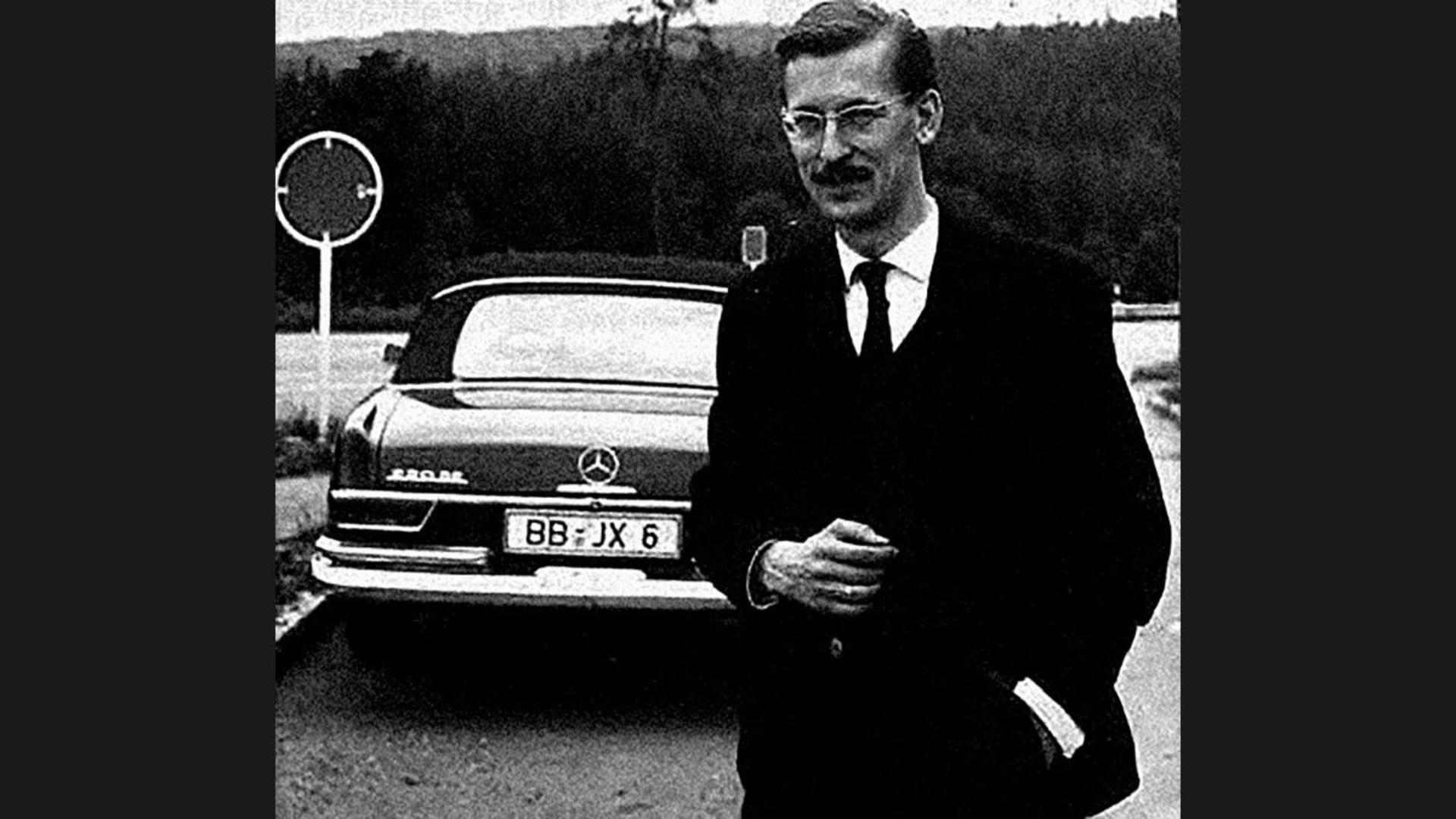
Paul Bracq did the styling, working under design chief Friedrich Geiger, and the brief was to keep everything that worked about the Fintail sedan while cutting the one detail most tied to a passing trend. Losing the fins was a deliberate call rather than a cost saving, made so the flagship two-doors would outlast the fashion the sedan was chasing. Six decades on, that decision looks like the right one. The low belt line, thin chrome window surrounds and long, unhurried tail have held up in a way plenty of 1960s convertibles have not.
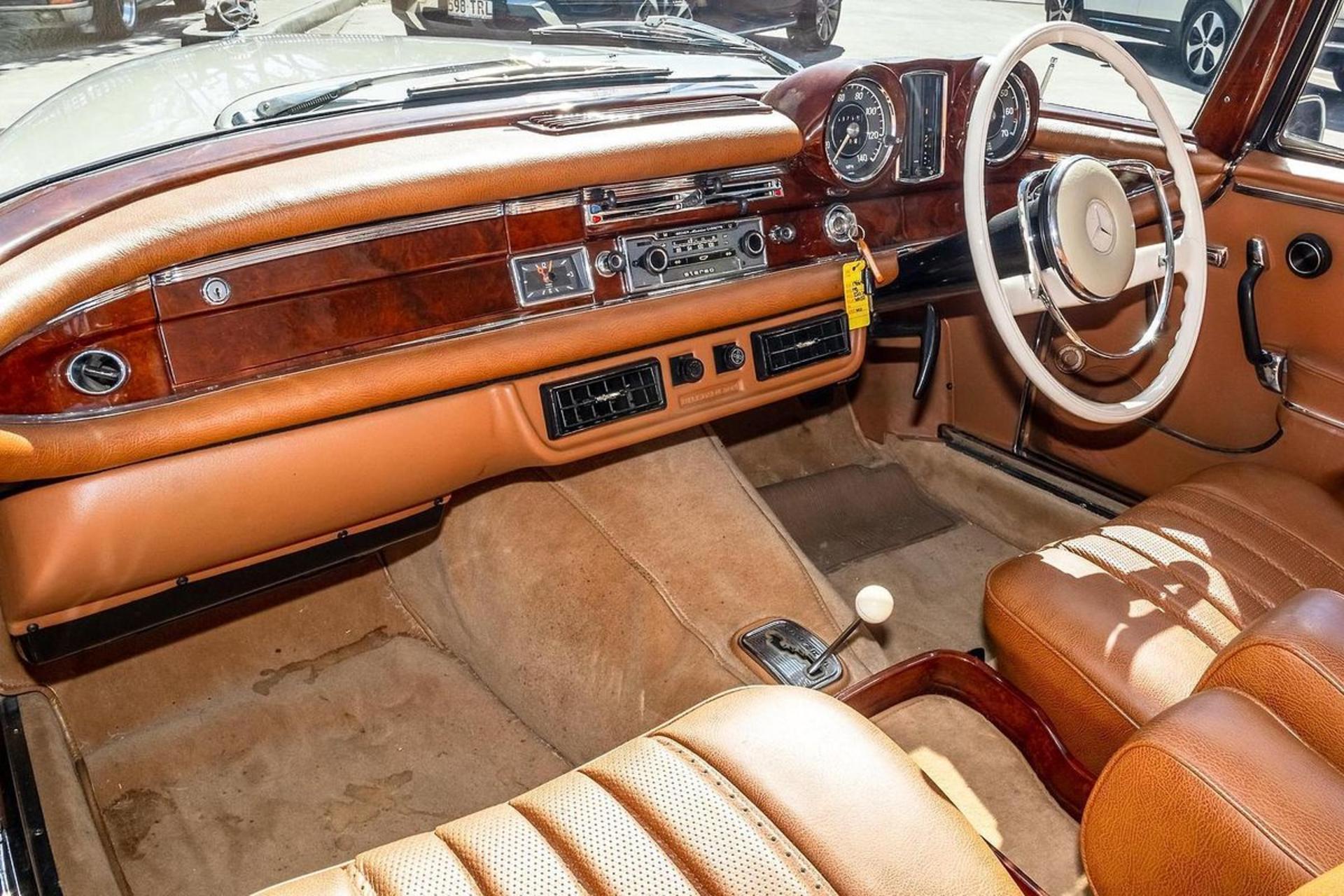
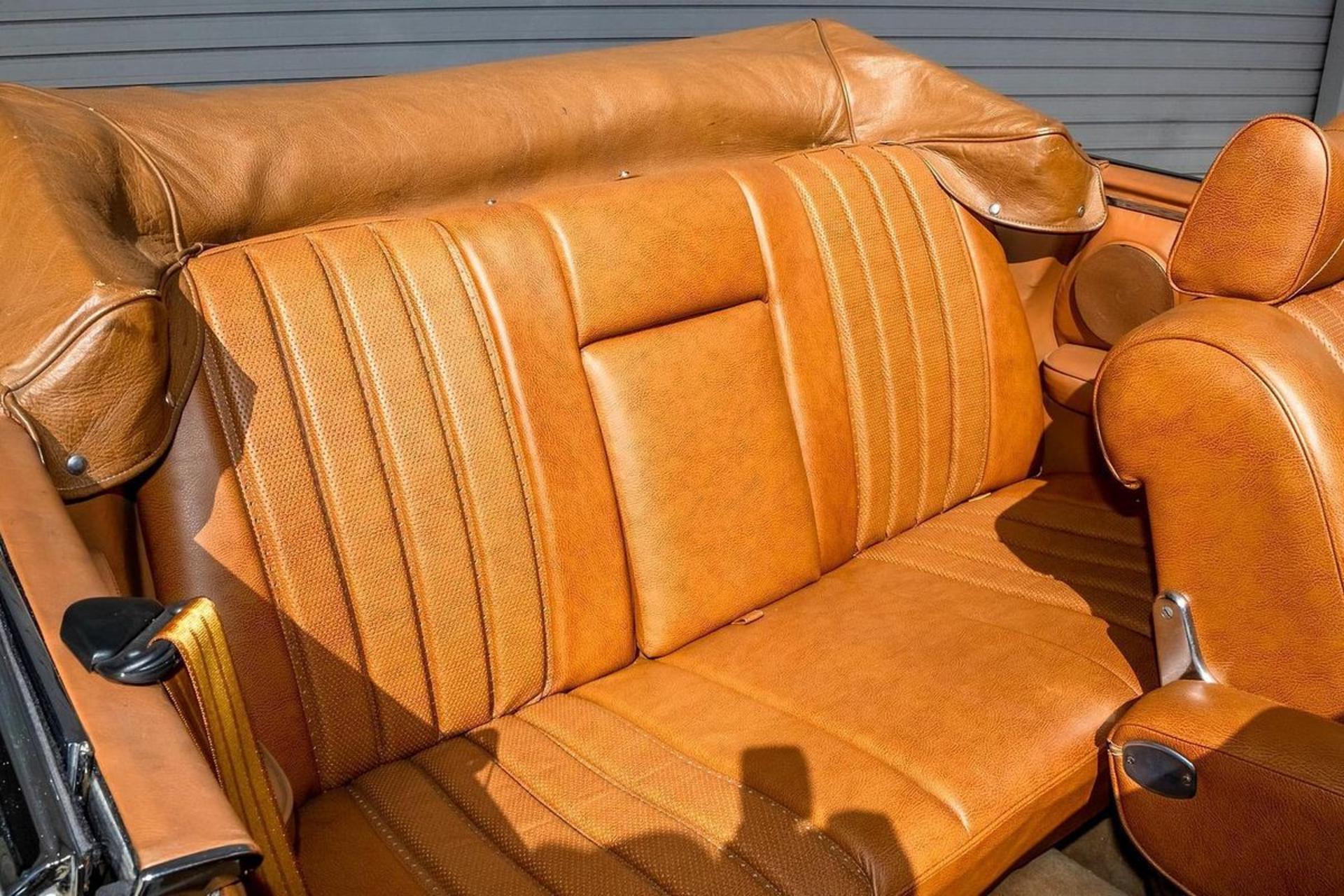
The cabin backs it up. Dashboards were finished in wood veneer running the full width of the car, seats trimmed in leather or MB-Tex, and the soft top was power-assisted and fully lined, folding away with none of the drama typical of a 1960s convertible. Assembly workers spent hundreds of hours fitting panels, wood and trim by hand to each car, which is most of the reason production numbers stayed so low.
How Many 250 SE Cabriolets Were Built?
Total 250 SE production across both coupé and cabriolet bodies is believed to be around 6,123 cars, and only 954 of those were cabriolets. That is a small number for a model built over two full production years, and it places the 250 SE Cabriolet well into the rare end of the classic Mercedes-Benz market, scarcer than the Pagoda roadster and closer to the flagship 300 SE cabriolet it effectively replaced.
| Model | Body | Production years | Approximate production |
|---|---|---|---|
| 250 SE | Coupé and cabriolet combined | 1965-1967 | 6,123 |
| 250 SE | Cabriolet only | 1965-1967 | 954 |
| 300 SE (W112) | Coupé and cabriolet combined | 1962-1967 | 2,419 |
Production figures are widely cited industry estimates rather than confirmed factory totals, and should be treated as approximate.
Why Do These Cars Command Such Strong Collector Value Today?
Scarcity explains some of it. Condition explains the rest, and it explains most of the price spread you see at auction. The parts of a 250 SE Cabriolet most likely to have deteriorated are also the most expensive to put right. Wood veneer cracks and lifts. The power hood mechanism is intricate and costly to rebuild once neglected. Body panels were gas-welded by hand, and finding a shop that can replicate that construction, let alone sourcing an accurate replacement panel, is hard going. Chrome trim unique to the model is no longer reproduced, so a car with straight original brightwork is worth meaningfully more than one that needs it replaced.
Provenance matters just as much. Cars with a documented service history, matching numbers and a traceable ownership chain sell for noticeably more than undocumented examples, sometimes by a wide margin. A clean, well-papered car can reach well into six figures at auction while a tired one needing full restoration might trade for a fraction of that. For a buyer, that gap is the whole game. A cheap 250 SE Cabriolet needing wood, hood and bodywork can quietly become the most expensive car you have ever owned once the restoration bill lands.
What Should Buyers Check Before Purchasing a 250 SE Cabriolet?
Start underneath. Rust in the sills, floor pans and around the rear wheel arches is the biggest cost driver on these cars, and because so few panels were ever reproduced, structural rust usually means fabrication rather than a straightforward panel swap. Cycle the hood through a full open and close to check the mechanism runs smoothly, look closely at the wood veneer for cracking or lifting at the edges, and check the chrome for pitting that no amount of polishing will fix.
Mechanically the M129 holds up well when it has been looked after, but the Bosch mechanical injection needs a specialist who actually knows it, and a service history that shows that work being done properly is worth paying up for. A pre-purchase inspection from someone who knows the W111 platform specifically, not a classic car generalist, will find things fresh paint and new upholstery are designed to hide.
| Check area | What to look for |
|---|---|
| Body and sills | Rust in sills, floor pans and around rear wheel arches, often the costliest repair on the car |
| Hood mechanism | Smooth operation through a full open and close cycle |
| Wood veneer | Cracking, lifting or delamination at the edges |
| Chrome trim | Pitting that polishing will not remove, since much of it is no longer reproduced |
| Fuel injection | Bosch mechanical injection serviced by a specialist familiar with the system |
| Documentation | Full service history, matching numbers and a traceable ownership chain |
What Does it Take to Own One in Brisbane and Queensland?
Queensland's climate suits this car better than most parts of the country. Consistent warmth and lower humidity than the southern states cut down the corrosion risk that plagues W111s stored somewhere wetter and colder, provided the car is garaged rather than left to bake under direct sun, which will speed up wear on both the wood trim and the soft top.
The local collector market for the W111 Cabriolet stays thin. Well maintained examples rarely surface in Brisbane, so most buyers end up looking interstate or overseas, and right-hand-drive cars are particularly hard to find given the model was never delivered new to Australia in any meaningful volume. Most cars here have been converted or imported from left-hand-drive markets, so it pays to understand exactly how and when that conversion work was done and by whom. A poorly executed conversion can cost as much to correct as a rust repair.
How Torr Automotive Can Help You Buy or Sell a 250 SE Cabriolet
Finding a genuine, well-documented 250 SE Cabriolet rarely comes down to scrolling local listings. Torr Automotive works this end of the market the way it needs to be worked, drawing on contacts well beyond Australia to locate the right car rather than waiting for one to turn up nearby.
If you are chasing this model, or something else entirely in the classic or prestige space, Torr Automotive can search, verify and secure the right example on your behalf wherever it happens to be sitting.
The same goes in reverse. Selling a car like this through a general listing rarely does it justice, and Torr Automotive's bespoke consignment service is built for exactly this kind of car, a discreet, tailored process aimed at the collectors most likely to actually value it, rather than the widest possible audience. For something as rare as a 250 SE Cabriolet, reaching the right handful of buyers matters more than reaching a lot of them.
Torr Automotive ships worldwide from its Brisbane base.
Whether you are buying, selling or just want an honest read on a car you have found, torrautomotive.com.au is where to start that conversation.
Learn more about our Consignment Services for classic and prestige cars.
Sell your Classic Car to us.
Search our Classic and Prestige Cars for Sale.